When “Equal” Breaks Families
Most inheritance fights don’t start with greed. They start with a mistake that looks reasonable on paper. Parents believe they’re being fair. The math checks out. The intent is good.
The mistake is assuming equal means fair. It doesn’t.
Here’s the pattern I see repeatedly. One child inherits the business, or the family property, or the asset that carries history, risk, and ongoing decisions. The other child inherits liquidity. On paper, the values line up. In real life, the experience doesn’t.
Because one child inherits responsibility, while the other inherits optionality.
That difference matters more than families expect. The child with the operating asset becomes responsible for decisions, upkeep, employees, partners, siblings, and judgment calls that never really end. The other can choose when to engage and when to step away. Both “received” something, but what they received behaves very differently over time.
Sometimes that responsibility shows up as a closely held business that requires constant attention. Sometimes it’s the family home no one can agree to sell. Sometimes it’s land, or a legacy asset that carries emotional weight along with financial risk. None of this feels unfair at the moment of transfer. It becomes unfair years later.
That’s when the consequences surface. Not as arguments at the reading of the will, but as forced sales, quiet exits, and relationships that never quite reset. One sibling feels trapped by obligations they never asked for. The other doesn’t understand why resentment exists at all.
Parents rarely intend this imbalance. In fact, they’re usually trying to avoid conflict. That’s the irony. By focusing on equal value, they unintentionally embed conflict into the structure itself.
The problem isn’t money. It’s pretending assets behave the same just because they’re valued the same. They don’t. Some assets demand decisions long after the estate is settled. Some require judgment under pressure. Some lock heirs into roles they never wanted.
Courts can divide assets. Spreadsheets can equalize numbers. Families still have to live inside the outcome.
The hardest estate conversations aren’t about valuation. They’re about responsibility. Who carries it. Who doesn’t. And whether the structure acknowledges that difference or ignores it.
The families that navigate this well don’t aim for equality. They aim for durability. They design outcomes that recognize asymmetry instead of pretending it isn’t there.
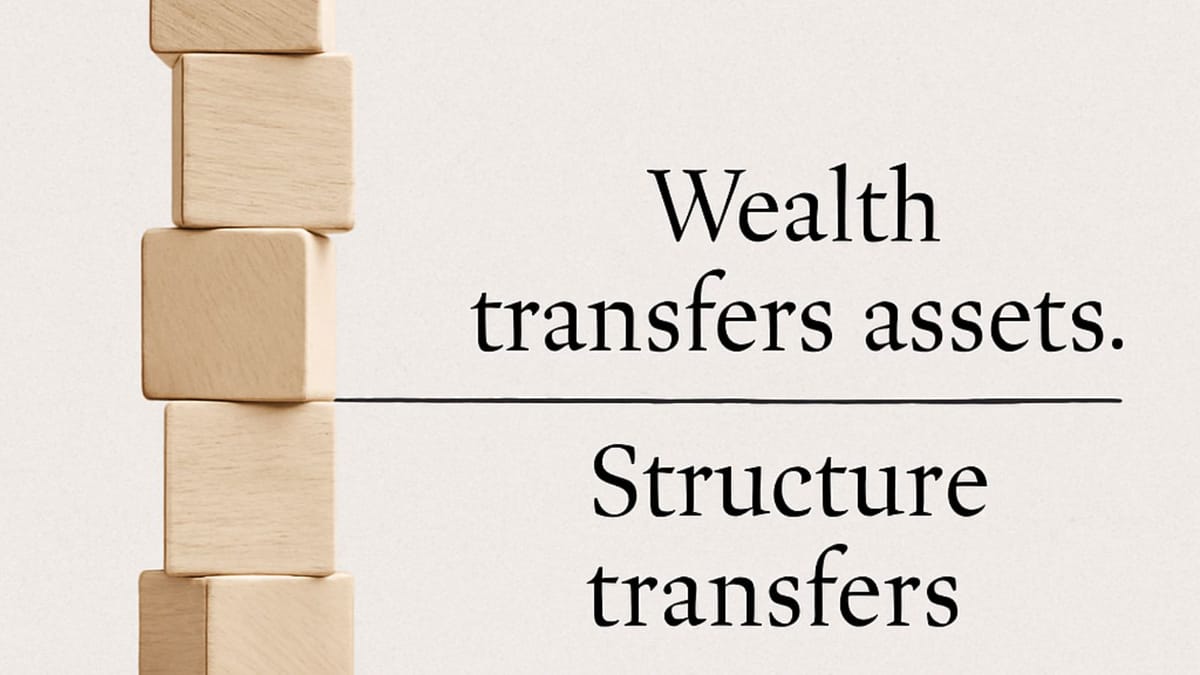
Wealth transfers assets. Structure transfers consequences.
Education only, not financial, legal or tax advice